A six-pack of cans is the default answer to the question of what to bring when you’re spending a day outdoors with people. It’s familiar, it’s portioned, it’s easy to distribute, and it doesn’t require anyone to think too hard. You grab it from the fridge, put it in a cooler, and the logistics are solved.
The problem is that this answer was designed for a world before good insulated containers existed at scale — before vacuum-insulated stainless steel jugs could keep drinks cold for twelve-plus hours without ice, before single-container formats became lightweight enough to carry on foot, before reusable large-format containers became affordable and widely available.
For a lot of outdoor situations, a gallon jug — or a 64oz to 128oz insulated growler-style container — is a better answer. Not in every case, but in more cases than most people currently use one for.
The Weight Math That Most People Get Wrong
The initial reaction to a large stainless steel growler is usually that it’s heavy. And it is — empty, a quality 64oz insulated jug weighs somewhere between 600g and 900g depending on construction. That’s a real weight to carry.
But six cans of beer or sparkling water weigh roughly 2.2kg full, plus the cooler to keep them cold, plus the ice. A 64oz growler filled with the equivalent volume of liquid weighs about 2.1kg total, with no cooler and no ice needed. The individual-container format looks lighter until you account for the full system — containers, cooling, and packaging waste — at which point the math often reverses.
For longer-duration outdoor activities where you’re carrying everything on your back, this becomes even more pronounced. Eight hours of hiking or a full-day paddling trip requires more than six cans of fluid anyway, and the weight of carrying multiple rounds of individual containers adds up quickly. A large insulated jug holds enough for multiple people across a full day and requires no ice or cooler once filled.
What Insulation Actually Changes About Outdoor Drinking
Cold drinks stay cold. This sounds obvious, but the experience of reaching into a cooler at hour six of a camping trip and finding that the ice has melted and everything is the temperature of the lake you’re sitting next to is common enough that most people have accepted it as just how outdoor drinking works.
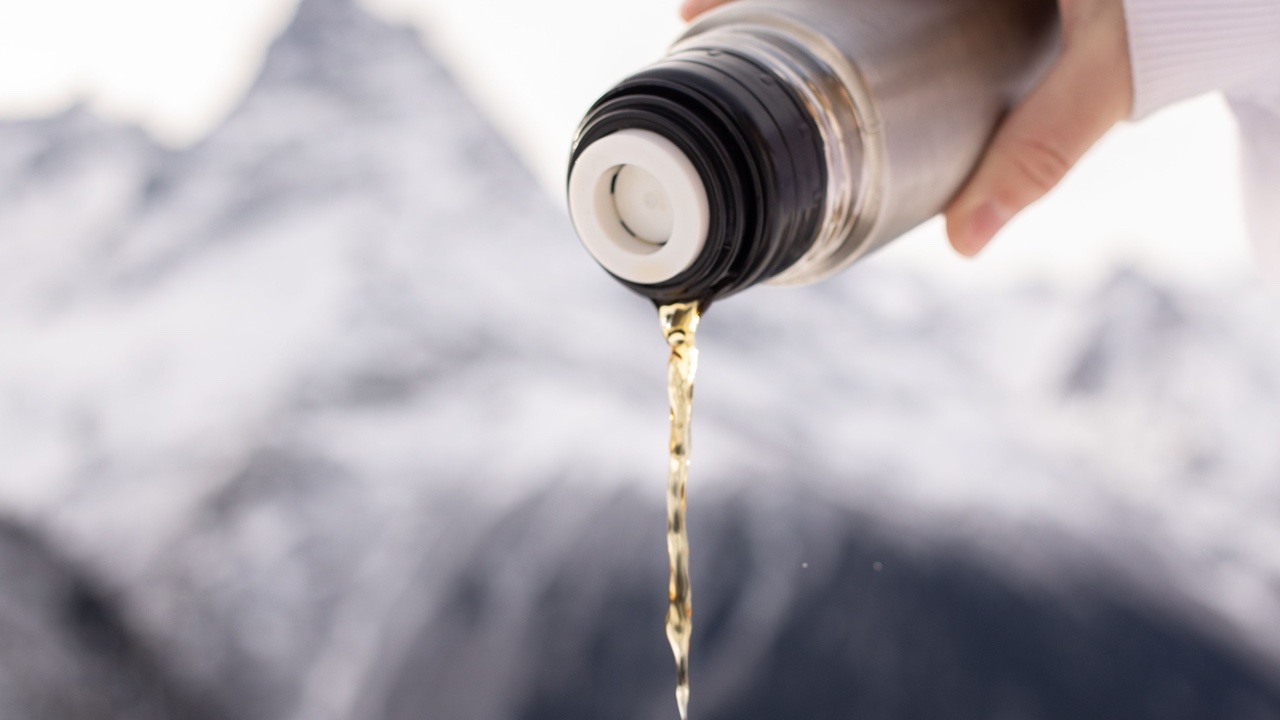
A vacuum-insulated stainless steel jug doesn’t require ice to keep cold drinks cold. Fill it with ice-cold water or a cold beverage in the morning and it will still be genuinely cold — not cool, not merely less warm than ambient, but cold — eight to twelve hours later, depending on ambient temperature and how often the lid opens. This changes the entire logistics of a day outdoors.
For hot drinks, the insulation works in reverse: hot coffee or tea in a large insulated jug stays drinking-temperature hot across a full morning, which is meaningful on cold-weather hikes, ski days, or early-morning activities where keeping a hot drink warm has historically required either a very large thermos or constant reheating.
The Waste Reduction Argument
This is worth stating plainly even if it’s not the primary reason most people make purchasing decisions. Six people spending a day outdoors, each having three to four drinks, generates twelve to twenty-four cans or bottles of packaging. A large growler generates one container that gets washed and reused.
For activities in sensitive outdoor environments — national parks, backcountry camping, remote water access — this difference is meaningful. Pack-it-out rules apply, and carrying out a bag full of empty cans at the end of a twelve-mile day is a worse experience than carrying out a clean jug. The reusable format also eliminates the ambiguity about what to do with each container in the moment.
The Situations Where a Growler Actually Wins
The argument for large-format insulated jugs isn’t universal. There are situations where individual cans or bottles are genuinely the right choice: mixed-company events where different people want different drinks, formal situations where individual serving units communicate something about hospitality, or settings where the containers need to be left with people for later rather than collected.
But for many of the situations where people default to a six-pack without thinking about it, the growler format is better:
Day hikes with a group. One person carries a 64oz jug for four people. Total system weight is lower than four individual water bottles plus a hydration pack, drinks stay cold, and there’s no collection problem at the end.
Beach or lake days. A large insulated jug on a towel keeps drinks cold without ice or a cooler taking up space. No ice melt means no soggy cooler situation.
Camping where resupply is possible. Refill from a water source or a cooler at camp rather than managing individual containers across multiple days.
Tailgating or outdoor events with a fixed location. One person manages the jug; everyone serves themselves. Less waste, less effort, drinks stay cold longer than in a cooler with ice.
Any situation where controlling what goes into the container matters. Custom mixes, infused water, homemade cold brew — the large-format reusable container gives flexibility that pre-packaged individual containers don’t.
What to Look For in a Large-Format Insulated Jug
The variables that matter most in this category are insulation performance, handle design, and mouth width.
Insulation performance in large-format containers is easier to achieve than in small ones — the ratio of surface area to volume is more favorable, which means heat exchange is slower relative to the amount of liquid inside. A well-made 64oz growler from a reputable water jug manufacturer will outperform most smaller bottles on a per-hour basis, simply due to physics.
Handle design matters because a full 64oz jug weighs over 2kg and will be carried and poured repeatedly. A handle that allows a secure grip during pouring, and that’s comfortable to carry over a full day, is worth looking for.
Mouth width determines both fill speed and cleaning access. Wide-mouth designs (2 inches or wider) fill quickly from a tap, accept ice cubes, and can be cleaned with a standard bottle brush. Narrow-mouth designs are harder to fill and clean but sometimes have better leak resistance for vigorous movement. For general outdoor use, wide-mouth is almost always the better choice.
The capacity decision depends on group size and activity duration. 64oz covers two to three people for a half day; 128oz handles four to six people comfortably for a full day. For truly large groups or multi-day situations, multiple smaller jugs are more practical than one very large one, since a 192oz jug full weighs over 6kg and becomes unwieldy to carry and pour.